3D Printing for Automotive Parts in Dubai | Custom Parts & Prototypes
3D printing for automotive applications produces custom parts, prototypes and tooling directly from CAD files – interior components, brackets, enclosures, jigs and reproduction parts – without the tooling costs or long lead times traditional manufacturing requires. It lets workshops, aftermarket brands and engineering teams get a functional part in days rather than weeks, and produce a single piece as economically as a small batch, without compromising fit or mechanical performance.
At Robust3D, we design and manufacture automotive parts, prototypes and reverse-engineered components for workshops, aftermarket brands and engineering teams across Dubai. Whether it’s a one-off replacement part, a prototype for testing, or a batch of matched components, we take the project from design to finished part in-house, engineered to the tight tolerances automotive applications demand – a bracket that’s a fraction of a millimeter off can be the difference between a clean fit and a rattling panel.
Faster Automotive Development with 3D Printing
Traditional automotive part production is built around tooling – injection moulds, dies and jigs that only make economic sense at high volumes.
That works well for mass production, but it’s a poor fit for prototypes, low-volume runs, and the aftermarket and reproduction work a lot of automotive projects actually need. 3D printing removes the tooling step entirely: a design becomes a physical part directly, so iteration is fast, a one-off part is realistic to produce, and a late design change is a new file rather than a new mould.
For workshops and engineering teams working on tight timelines, that difference often decides whether a project is feasible at all – a reproduction part that would take weeks to tool up for traditionally can often be printed, tested and delivered before the traditional tooling would even be finished.
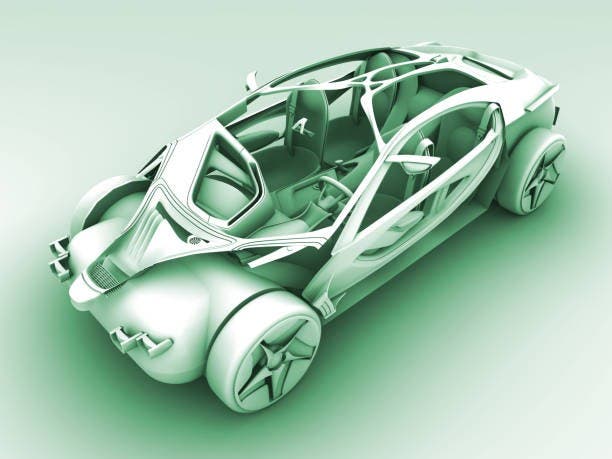
Custom Automotive Parts We Manufacture
We produce a range of functional automotive components, engineered for fit and durability rather than just visual accuracy.
Interior Trim, Panels & Mounts
Dashboard components, trim panels, vents and mounting brackets, printed and finished to match the fit and surface quality of the original part or a specified design, including color and texture matching where the piece is visible in the cabin.
Brackets, Clips & Functional Assemblies
Mounting brackets, clips and small functional assemblies designed to handle real mechanical loads, not just hold their shape on a shelf – material and wall thickness are chosen based on the stresses the part will actually see in use.
Custom Enclosures & Housings
Housings for electronics, sensors and control units, designed around the exact space and mounting points available in the vehicle rather than adapted from a generic enclosure, with cable routing and access points accounted for at the design stage.
Aftermarket & Discontinued Part Reproduction
Reproduction of aftermarket and no-longer-available parts, produced from a design file, a scan, or a physical reference part when no CAD file exists – often the only realistic path to a replacement part for an older or low-volume vehicle.
Reverse Engineering for Automotive Parts
A large share of automotive part requests start with no CAD file at all – a discontinued part, a damaged original, or a component that was never digitized in the first place.
Our reverse engineering process scans the physical part, reconstructs it as usable CAD, and refines the design for 3D printing before production, correcting for wear or damage on the reference part rather than reproducing it exactly. This is how we handle most reproduction and legacy part requests, and it means a part doesn’t need to exist as a digital file already for us to produce it.
For a closer look at how this process works across applications beyond automotive, see our reverse engineering service.
-
01Scan the physical part
A discontinued part, a damaged original, or a component that was never digitized.
-
02Reconstruct as usable CAD
The scan becomes an editable digital model.
-
03Refine for 3D printing
Corrected for wear or damage on the reference part, rather than reproducing it exactly.
Tooling & Manufacturing Aids
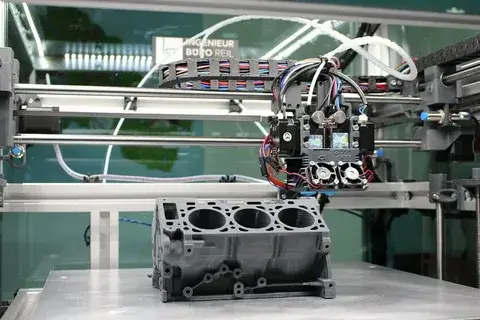
Beyond finished parts, we also produce jigs, fixtures and inspection aids used on automotive production and workshop lines. A custom-fit jig or fixture built to 3D print speed means a production line doesn’t have to wait on a machined tooling lead time to test or implement a process change, and a one-off fixture for a specific job is realistic to produce without the cost a fully machined equivalent would carry.
This applies just as well to a small workshop needing a single alignment fixture as it does to a larger line needing a full set of inspection aids for a new process. See our manufacturing page for tooling beyond automotive.
- Jigs
- Fixtures
- Inspection aids
- Alignment fixtures
Our Automotive Development Process
Every automotive project follows the same structured process, whether it’s a single reproduction part or a batch of prototypes – and reverse engineering is folded into this process wherever it’s needed, rather than treated as a separate project.
-
01
Consultation & Requirement Review
We review the part, application and any existing files, scans or physical references to confirm the right approach.
-
02
Design or Reverse Engineering
We develop a new design from your brief, or reconstruct one from a scan or physical part where no file exists.
-
03
Material Selection & Engineering
Material and print settings are chosen based on the part’s mechanical, thermal and fit requirements.
-
04
Prototype or First-Article Production
A first part is printed for fit and function testing before full production.
-
05
Testing & Iteration
You test fit and function, and we revise the design as needed before committing to a full run.
-
06
Production & Finishing
Approved parts move to production, with paint or protective coating applied where the application requires it.
Materials for Automotive Applications
Material choice depends on where the part sits in the vehicle and what it needs to withstand – a part inside the cabin has very different requirements from one near the engine bay or exposed to the elements. Here’s a quick reference:
| Application | Typical material | Why |
|---|---|---|
| Interior trim & panels | ABS/ASA thermoplastics | Heat resistance, stable finish |
| Structural brackets & mounts | Nylon or carbon-fiber reinforced | Strength under mechanical load |
| Flexible components (seals, grommets) | Flexible/TPU-type materials | Bend without cracking |
| High-detail reproduction parts | Engineering-grade resin | Fine surface and dimensional detail |
For any part exposed to engine heat, UV or road conditions, our paint and finishing process includes protective coatings matched to the part’s environment, not just its appearance – a reproduction part that looks right but fails after a season of Dubai heat hasn’t actually solved the problem it was made for.
Who We Work With
Automotive workshops & garages
Automotive workshops and garages come to us for reproduction and replacement parts they can’t source through normal channels, particularly for older or discontinued vehicles where the original manufacturer no longer supplies the part.
Aftermarket & customization brands
Aftermarket and customization brands work with us on custom components and small-batch production where injection-molded tooling wouldn’t be justified, often iterating on a design across several rounds before settling on a final version.
Motorsport & performance teams
Motorsport and performance teams need lightweight, fast-turnaround prototypes and functional parts on timelines standard manufacturing can’t match, sometimes between race weekends.
Engineering & R&D teams
Engineering and R&D teams, including EV and mobility startups, use us for functional prototypes during development, before a design is locked for mass production, when a part still needs to change based on test results.
Quality & Transparent Pricing
Right the first time
Automotive parts have to fit and function correctly the first time, particularly for reproduction and replacement work where there’s no room for a part that’s “close enough.”
Every part is checked against the original specification, scan or design file before delivery, not just visually approved.
Quoted individually in AED
Because automotive projects range from a single reproduction part to a batch of prototypes, we quote every project individually in AED with a clear breakdown of design, reverse engineering (where needed), production and finishing costs, so there are no surprises between your initial brief and final delivery.
Consistent across every batch
For multi-part orders, we also confirm a consistency check across the batch, so every bracket, panel or fitting matches the approved sample.
Frequently Asked Questions
Can 3D printed automotive parts be used in functional vehicles?
Yes, with the right material and design. We engineer each part to the mechanical, thermal and fit requirements of its specific application, not just to visually match the original.
Which materials are best for automotive 3D printing?
It depends on the part’s role. ABS/ASA suits interior trim, nylon or carbon-fiber reinforced materials suit structural brackets, flexible materials suit seals and grommets, and engineering-grade resin suits high-detail reproduction parts.
Do you provide reverse engineering for old or discontinued car parts?
Yes. When no CAD file exists, we scan the physical part – or a damaged or discontinued original – and reconstruct it as usable CAD before producing a replacement.
Can you manufacture custom aftermarket automotive components?
Yes. We design and produce custom components for aftermarket and customization brands, including small-batch runs that wouldn’t justify traditional injection-molding tooling.
How long does automotive prototyping take in Dubai?
Turnaround depends on part complexity, material and whether reverse engineering is involved. Share your brief and we’ll confirm a timeline and AED quote before work begins.
Do you support low-volume automotive manufacturing?
Yes. Because there’s no tooling involved, producing a small batch of matched parts is as economical as producing a single piece, which is one of the main reasons workshops and aftermarket brands use us over traditional manufacturing.
Can you reproduce a part if I only have the damaged original, not a working sample?
Usually, yes. Our reverse engineering process can account for wear or minor damage when reconstructing the part as CAD, correcting the design back toward its original intended shape rather than reproducing the damage.
Start Your Automotive 3D Printing Project in Dubai
Whether you need a single reproduction part, a functional prototype, or a batch of custom components, our team will confirm the right material, process and timeline, and get you a clear AED quote. Share your part details, scan or reference files to get started.
Call +971 50 221 8492 or email info@robust3d.com